31 December 2025: The end of the first quarter of this century. My mind, despite its best endeavours, drifts toward New Year resolutions. This was first to come to mind: I’m wondering, seriously, if I might give up opinions for new year. They are the source of so much bother. But how to achieve that, realistically? Conscious effort seems the only option in the short term, perhaps leading to a change in disposition. Or a first step may be to stick with opinions but not to express them. That may be more achievable in the short term. (I am reminded of the advice that before saying anything one might ask ‘does this need to be said? Does it need to be said now? Does it need to be said by me?).
0 Comments
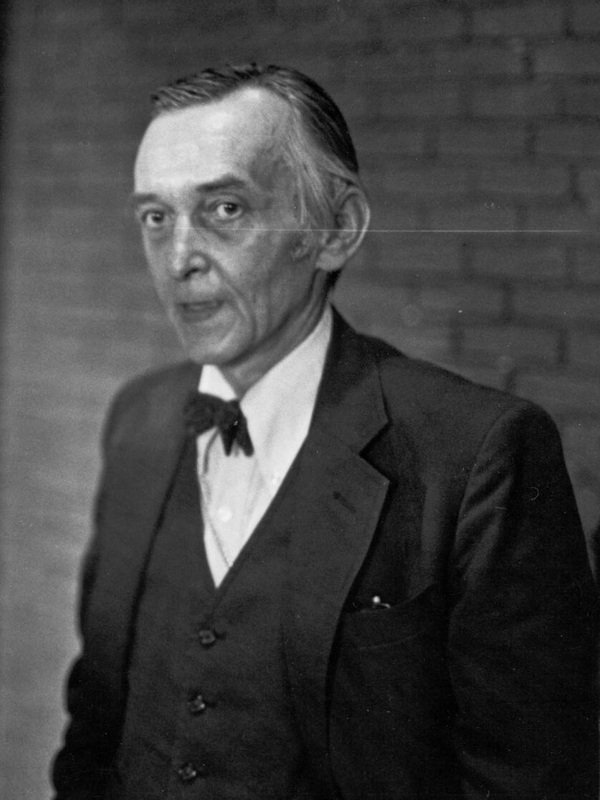
William McCrossan (aka Liturgical William of Bow) "There is a deep instability which should be the mark of the authentic Christian: for here we have no continuing city, but we seek one to come. Apart from other considerations, the acceptance of Baptism is the sign of a profound instability because Baptism is a death unto sin, and a new birth unto righteousness and it requires a renunciation of the vain pomp and glory of the world, with all covetous desires of the same." Unpublished autobiographical essays. Find out more about Liturgical William of Bow Maggie Ross from an interview in the Church Times: "Contemporary theological education prepares people either for the petty battlegrounds of academia or for the spiritual suicide of ordination. Evagrius's notion of the absolute relationship of theology and praxis has been lost. There are a few good people who are exceptional in this regard, but they wisely camouflage themselves. There is an absolute abyss between the clericus and ordinary people, who are implicitly denigrated by them, and most theological education just widens this abyss. Also, so-called spiritual direction as it is practised today is destructive. It is both para-clerical and counter-productive, because it makes people more self-conscious instead of more self-forgetful, which is an important sign of spiritual maturity. Helping another is a charism of the moment, usually inadvertent, and can't be taught."
Maggie Ross is the pen name of a vowed Anglican solitary under episcopal guardianship. I have enjoyed reading her various works, not least because in part they confirm some of my own conclusions, and because they can be a heck of a provocation. Not for her the equation between the Church of England and niceness. If you find this quotation interesting, here are links to more about her: Seen in the West End yesterday: a stylish man sporting a sharp haircut and expensive-looking clothes. A tattoo on the rear of his left upper arm, so not visible to him (as an aide-memoire, say) but to those following. In a rather well-chosen typeface too. It read: "Attached to Nothing, Connected to Everything". I didn't dare interupt him to ask about this. I imagine he is announcing his commitment to non-attachment and interconnectedness. I can only respect all that. But his collection of designer-labelled shopping bags seemed to confuse the message. Harold Macmillan, 1st Earl of Stockton, (1894–1986) British statesman and Conservative politician who was Prime Minister of the United Kingdom from 1957 to 1963. He was nicknamed "Supermac" and was known for his pragmatism, wit, and unflappability. Here is his motto when at Number 10. Motto for Private Office and Cabinet Room: "Quiet, calm deliberation disentangles every knot - HM" "Get over yourself", when said to us by another, is often (usually) said as a rebuke, in anger, and is hurtful to hear. But the useful thrust of that perspective, when we can say it to ourselves, lovingly, is about the need to transcend our ego (something we all have). I found this helpful approach from Bertrand Russell: "Make your interests gradually become wider and more impersonal, until bit by bit the walls of the ego recede, and your life becomes increasingly merged in the universal life. An individual human existence should be like a river — small at first, narrowly contained within its banks, and rushing passionately past rocks and over waterfalls. Gradually the river grows wider, the banks recede, the waters flow more quietly, and in the end, without any visible break, they become merged in the sea, and painlessly lose their individual being."
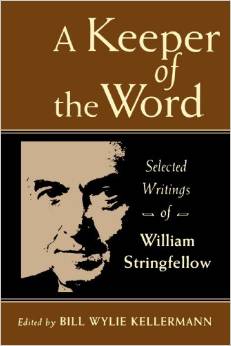
Discovering the writing of William Stringfellow some years ago was a memorable find. Here he is on "Career vs. Vocation"
“I had elected then [in my early student years] to pursue no career. To put it theologically, I died to the idea of career and to the whole typical array of mundane calculations, grandiose goals and appropriate schemes to reach them…. I do not say this haughtily; this was an aspect of my conversion to the gospel…. “[Later] my renunciation of ambition in favour of vocation became resolute; I suppose some would think, eccentric. When I began law studies, I consider that I had few, if any, romantic illusions about becoming a lawyer, and I most certainly did not indulge any fantasies that God had called me, by some specific instruction, to be an attorney or, for that matter, to be a member of any profession or any occupation. I had come to understand the meaning of vocation more simply and quite differently. “I believed then, as I do now, that I am called in the Word of God … to the vocation of being human, any work, including that of any profession, can be rendered a sacrament of that vocation. On the other hand, no profession, discipline or employment, as such, is a vocation.” A Keeper of the Word: Selected Writings of William Stringfellow (Eerdmans, 1994), pp. 30-31 "Humans are most likely the only species that experiences disgust, and we seem to be the only one capable of loathing its own species" William Miller in The Anatomy of Disgust quoted by Richard Beck in Unclean: Meditations on Purity, Hospitality and Mortality. What a scary observation. I mused on it with Murphy the Cocker Spaniel, and agreed it seemed plausible.
|
Categories
All
Archives
January 2026
Sites I keep an eye on
Beaker Folk A Contemporary Spirituality Mother Pelican Feral Spirituality The worker priest |